×

Take a glimpse

BITS Edu Campus
BITS Technology BITS Pharmacy BITS Physiotherapy BITS Ayurveda
+

Electrical

Electrical Department


Since its inception in 2004, the BITS Edu Campus has been a premiere engineering institute in Gujarat. The Electrical Engineering department is an integral part of the institute right from the day of commencement. The department offers under-graduate courses with a yearly intake of 120 students. The tremendous growth of the department is due to its emphasis on the update of infrastructure facilities and academic programmes. This has resulted in the department boasting highly proficient electrical engineers among its alumni who are contributing towards building a brighter future for our society and nation.

Mission & Vision


Mission

  • To train students to be qualified competent technical personnel with high quality engineering skills.
  • To have inclination towards entrepreneurship and employ-ability enhancement skills with research and innovation.
  • To imbibe professional ethics and human values in the students who have commitment for better society.
Vision

To impart state of the art knowledge of Electrical Engineering to prepare graduates who excel in technical knowledge and who exercise this knowledge with professional ethics and human values.

PEO’s & PSO’s


Program Educational Objective


PEO: 1
To produce graduates who are proficient in vocations with strong foundation in interdisciplinary areas of engineering.

PEO: 2
To produce graduates who acquire skills and develop aptitude for effective and expert practices.

PEO: 3
To produce graduates who will creatively accomplish comprehensive training, an essential for being a responsible part of the society.

PEO: 4
To produce graduates who will be habituated with long lasting learning to become pioneers in innovatively dynamic modern industrial culture.

Program Specific Outcome


PSO:1
At the end of the program, the student should be able to clearly understand the concepts and applications in the field of Electrical Engineering, Power system, Power electronics.

PSO:2
At the end of the program, the student should be able to associate the learning from the courses related to Electrical Machines, Power system, Power electronics & High voltage engineering.

PSO:3
At the end of the program, the student should have the capability to comprehend the technological advancements in the usage of modern simulation tools to analyze and design subsystems for a variety of applications.

PSO:4
At the end of the program, the student should have the skills to communicate in both oral and written forms, the work already done and the future plans with necessary blueprint, demonstrating the practice of professional ethics and the concerns for society and environment & engineering.

Faculty Profile


Faculty Achievements


1. MOOC Completed on “Effective Engineering Teaching In Practice” by NPTEL (Ravidra K Yadav).

2. MOOC Completed on “Accreditation and Outcome based Learning” by NPTEL( Dr. Pritesh Mankad)

3. Received 50000 Rs. Grant from GUJCOST for two days seminar on “ recent trends in power electronics & embedded systems”

4. Ravindra K Yadav delivered and expert Talk at Birla Vishvakarma Mahavidyalaya Engineering College on TEQIP Sponsored Two week STTP.

5. Pritesh Mankad, delivered an expert lecture on “Latest trends in Electric Vehicles and Traction” at GUJCOST sponsored one week short term training program on “Emerging trends in Electrical Power and Energy Systems” , 7th January-12th January-2019 organized by Electrical Engineering Department of SVIT-Vasad.


1. MOOC completed on “ INTRODUCTION OF SMART GRID” by NPTEL (Ravidra K Yadav)

2. Rs 100000 worth robotic kits received on successful completion of e-Yantra task-based training at IIT-Bombay.

3. 10000 received for conducting energy conservation awareness seminars at BIT from GEDA.

4. Pritesh Mankad and Dr. Heli Shah participated in the two-day workshop on “Introduction to Robotics” conducted on 19th and 20th January-2018 at Indian Institute of Technology Bombay.

5. Pritesh Mankad and Dr. Heli Shah completed Task Based Training (TBT-2017) during December 11, 2017-March 31, 2018 conducted as a part of Teacher Training through e-Yantra Lab Setup Initiative (eLSI) and the team was awarded Grade A by IIT Bombay.


1. Dattesh Joshi completed his Ph.D

2. Samir H. Patel completed his Ph.D

3. IEI West Zone Alumni Award to Ravindra K Yadav

4. 10000 received for conducting energy conservation awareness seminars at BIT from GEDA.

5. The certificate of Fellow membership was awarded to Dr. Pritesh Mankad on 30th November, 2017 by the Institution of Engineers (India) with membership number F-123452-4

Laboratories

The following are the features of the software lab present in the department:

  1. Total Number of Computers: 20
  2. Technical Software available in the Software lab:
    1. MATLAB
    2. Mi Power
    3. Proteus
    4. P-Sim 9.1
    5. SCILAB
  3. This Computer Lab is being extensively used by the B.E. Project students in addition to the following regular Laboratory courses.
    1. Signals and Systems –IV Semester B.E.
    2. Control System Theory – III / V Semester B.E.
    3. Electrical Power System II – VI Semester B.E.
    4. Power Electronics – V / VI Semester B.E.
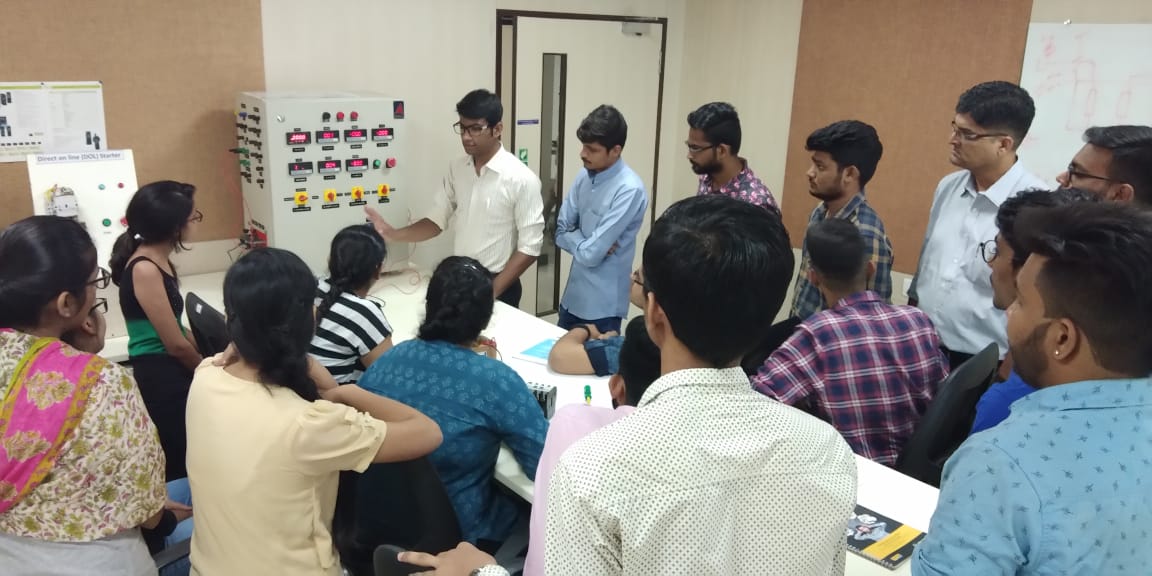
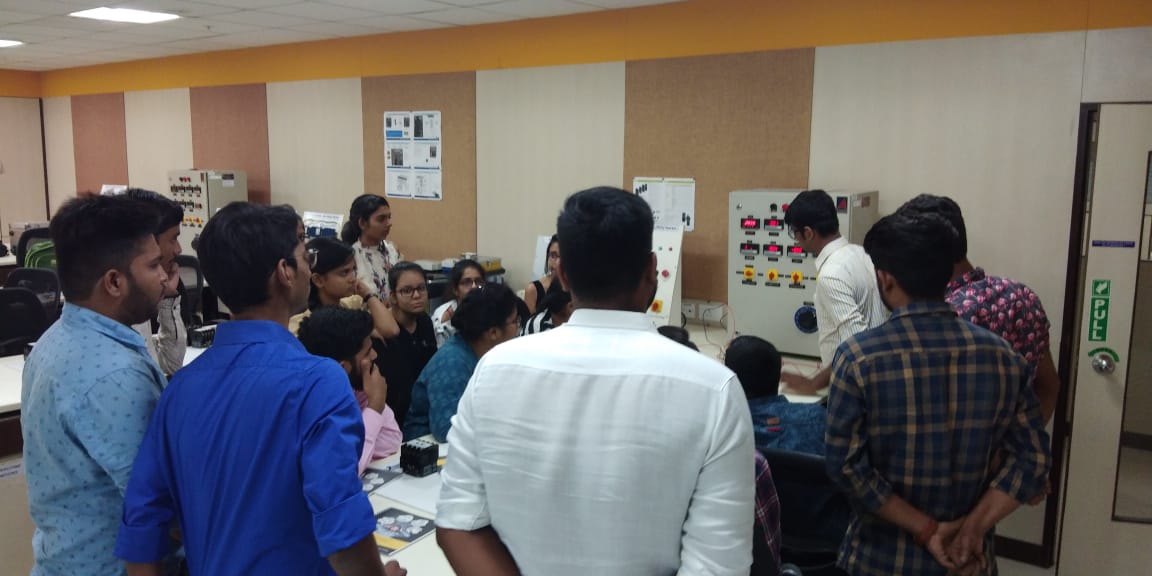
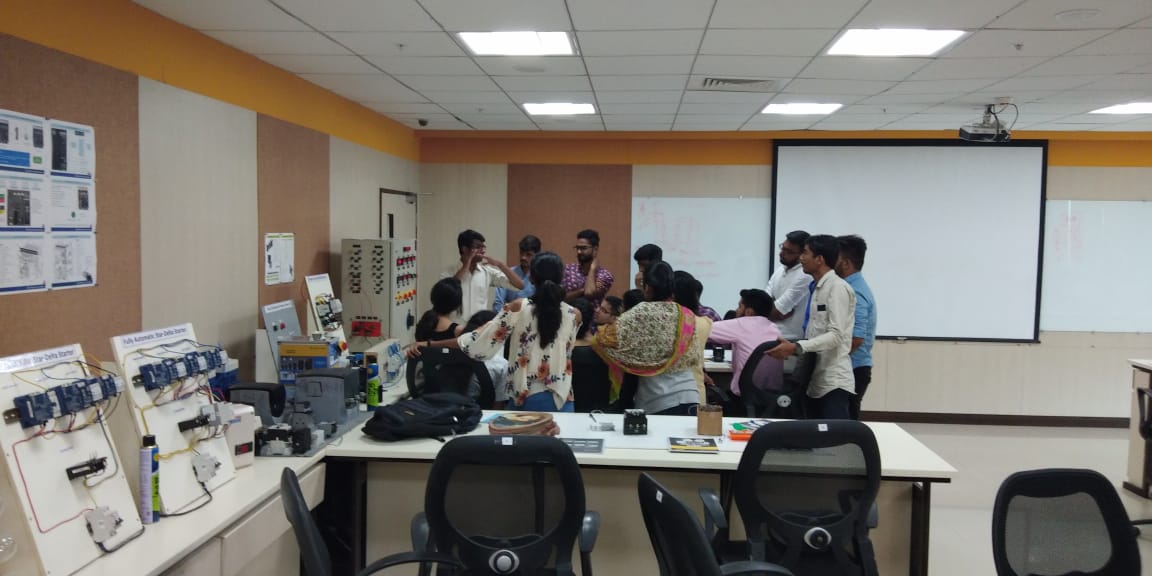
The objective of the laboratory is to provide the students a chance to put theory into practice. It also encourages the students to troubleshoot the system in organized and established manner. Besides, the lab instills in the students the awareness and practice of safety.

The Electrical Machines lab under the department is equipped with electrical machines like dc motors, ac motors, dc generators, transformers and alternators. The lab facilitates the students to study the characteristics / behaviour of these electrical machines and helps them to have a better understanding of what they have studied in their theory classes and text books.

All types of DC Machines, single phase and three phase squirrel cage and slip ring induction motors, single-phase and three phase transformers, suitable starters and loading arrangements for machines, measuring instruments of all types needed for the laboratory experiments are there in the laboratory. The Electrical Machines Laboratory is utilized by all branches of students for lab work. All these facilities are used by the teachers for research and development work.

To enable students, understand the operation of semiconductor devices and power electronics converters, the laboratory is equipped with experimental set-ups where students are exposed to design-based experiments. The laboratory also enables students to carry out UG projects effectively.

Thyristor converters, DC chopper modules, power devices such as Thyristors, Power MOSFETs, IGBTs of various voltage and current ratings, Opto-Isolators, Pulse transformers and other related commutating components are there in the laboratory.

A Number of modules of AC-DC converters, voltage controllers – single phase as well as three phase, DC chopper units and inverters using Power MOSFETs and IGBTs, solid state soft start units for three phase induction motors have been built in the last five years as project works of UG students.
A state-of-the-art laboratory is designed to provide platform for basic studies. It offers testing facilities for the power apparatus insulators. This laboratory helps students to understand the various aspects of insulation and phenomenon like lightning and surges in electrical power system.

A protection laboratory equipped with number of relays including numerical relays for transformer, and motor protection has been developed. This laboratory is useful to the students of UG in getting up-to-date knowledge of the working of various types of relays by actual demonstration on in-house designed panels.
This is the lab which is very important for the basic knowledge about the various instruments with facilities for the group of 20 students to carry out experiments independently.

The lab is equipped with latest technologies in electrical measurement and instrumentation such as Kelvin Bridges, Wheatstone’s bridges, energy meters, digital multi meters, etc. It ensures that the students become experts in practical knowledge related to electrical measurement process under the guidance of faculty members from the Department of Electrical Engineering. The lab is well equipped and enables students to understand the fundamentals of various measuring instruments.

Major Equipment in Measurement and instrumentation Lab areLVDT(Linear Variable differential transformer), Thermocouple, pressure gauge, Resistance strain gauge etc.

This laboratory will introduce students to get familiar with the architecture and basic operations of microcontroller and microprocessor. It provides in-depth knowledge of Software and hardware experiments with a microprocessor and controller system. It also deals with assembly language programming, simple input/output interfacing, and interrupt processing in microprocessor and microcontroller systems.
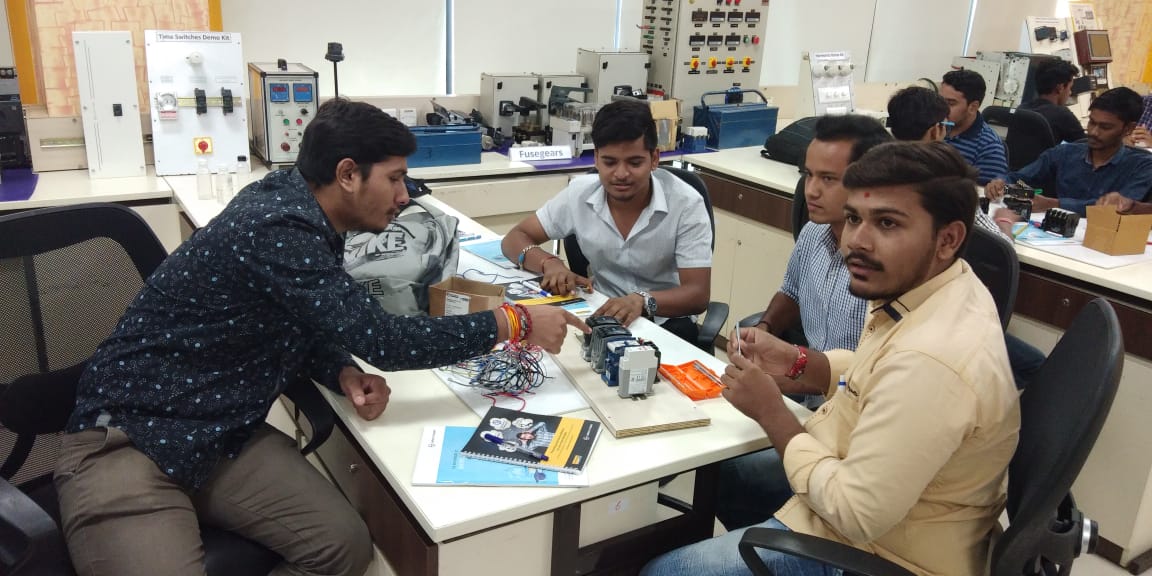
The workshop is used for course introduction to electrical engineering. Here the students are given hands on training in electrical wirings. They are given a basic idea about the operation and power consumption of certain electrical appliances such are mixies, iron box, pumps, fan etc. Students are familiarized with supply arrangements and their limitations, knowledge of standard voltages and their tolerances, safety aspects of electrical systems and importance of protective measures in wiring systems, knowledge about the types of wires, cables and other accessories used in wiring. Students are able to wire simple lighting circuits for domestic buildings and distinguish between light and power circuits and to measure electrical circuit parameters and current, voltage and power in a circuit.

Industrial Visit Gallery


1 / 5
2 / 5
3 / 5
4 / 5
5 / 5